

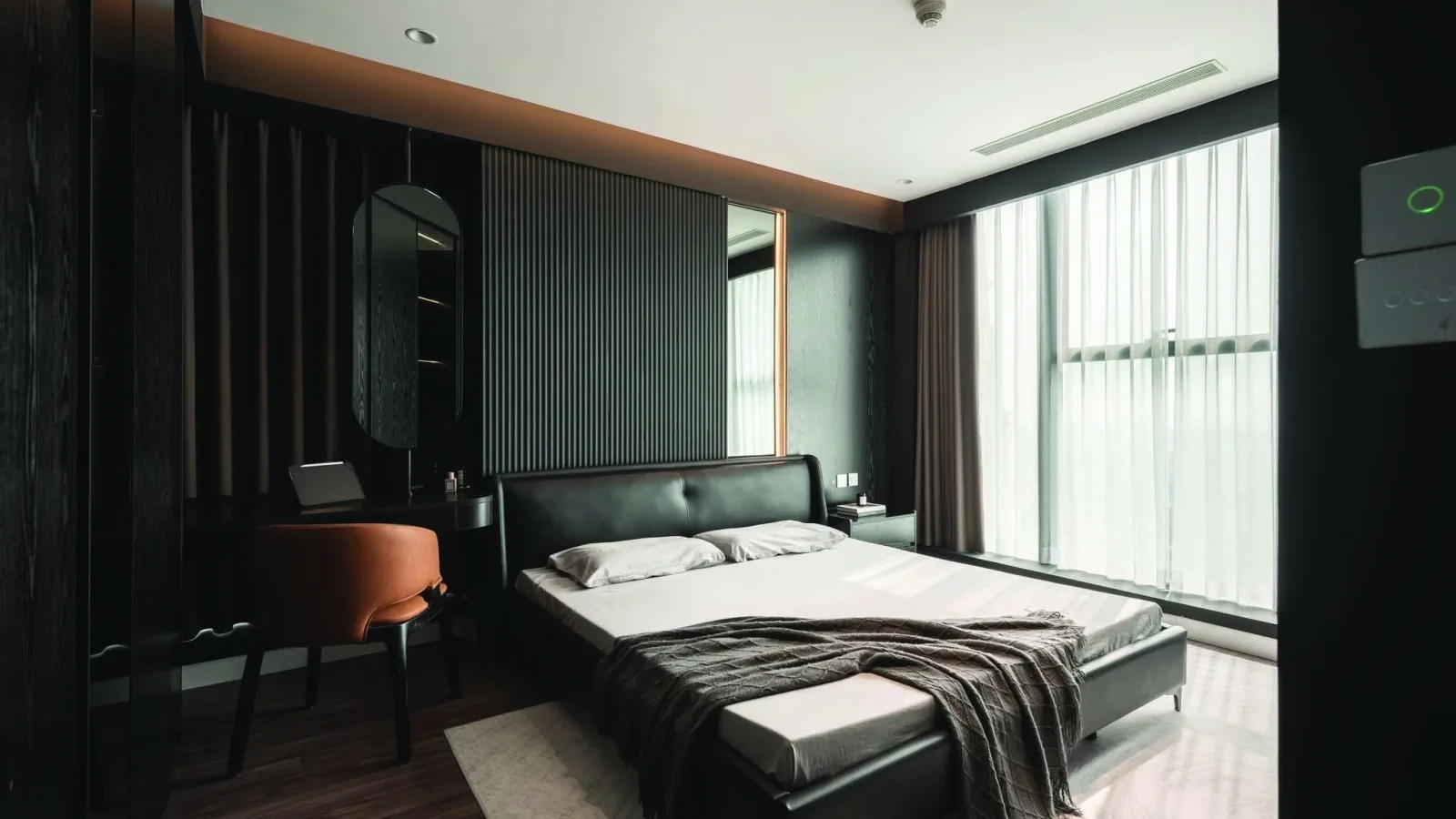
PVC wall panels are ready-made interior boards that finish a wall in a single layer. A factory extrudes them from polyvinyl chloride, adds a decorative surface and cuts them to a fixed length. On site they go straight onto the wall or onto a light batten frame. So the finish arrives already made, and the wall goes up in boards rather than in coats.
That is the short answer to what PVC wall panels are. The longer answer matters more if you specify them for a project. Two boards can look identical in a showroom and behave very differently once they are up. Rib geometry, film quality, wall thickness and dimensional tolerance all sit under the surface, and a photograph shows none of them.
We extrude these panels ourselves, so this guide takes a production view. In short, it covers what the material is, how a board is put together, where it works, where it does not, and what to ask a supplier before you commit.
What is a PVC wall panel?
A PVC wall panel is a rigid extruded board with a finished face. Paint and wallpaper are coatings, so they take on the shape and the flaws of whatever sits underneath. A panel, however, behaves differently. It carries its own thickness and its own edge, and it therefore spans small irregularities instead of copying them.
Each board has a machined edge on both long sides. Those edges lock together, which is how a run of boards becomes a continuous surface. Trims then close the perimeter at floor, ceiling and corners. The boards and the trims form a system rather than a single product, and that distinction shapes almost every decision further down this page.
Panel lengths are generally long. Our flat boards run 3,000 mm, so one panel usually reaches from skirting to cornice in a single piece. Fewer horizontal joints follow from that, which is one reason designers reach for panels on tall feature walls.
What are PVC wall panels made of?
The base material is polyvinyl chloride, a thermoplastic used across construction for pipe, window profile and sheet. On its own, PVC resin is not a finished compound. Instead, producers blend it with stabilisers, processing aids, fillers and pigment before extrusion. That blend, rather than the resin alone, decides how stiff a board is and how well it holds its shape over time.
Two broad families reach the market. Some panels use a mainly mineral-filled PVC compound. Others use a wood-plastic composite, where wood flour joins the polymer. Makers extrude both, and both can carry the same decorative films. Our guide to how the boards are extruded follows that process in detail. Still, they differ in density, in stiffness and in how they take a fixing.
General industry information ends about there, because formulations are proprietary and few suppliers publish a recipe. Documentation is therefore the practical substitute. Our own flat board holds a Vietnamese product certificate under TCVN 11353:2016, issued for a film-laminated wood-plastic composite decorative board at 3000 × 400 × 8.2 mm. That certificate names the standard, the assessment scheme and the validity period, so a specifier can check its scope against the product actually being quoted.
How are PVC wall panels structured?
Cut a board across its width and the anatomy becomes clear. Most decorative panels share the same elements, although the proportions vary a great deal between products.
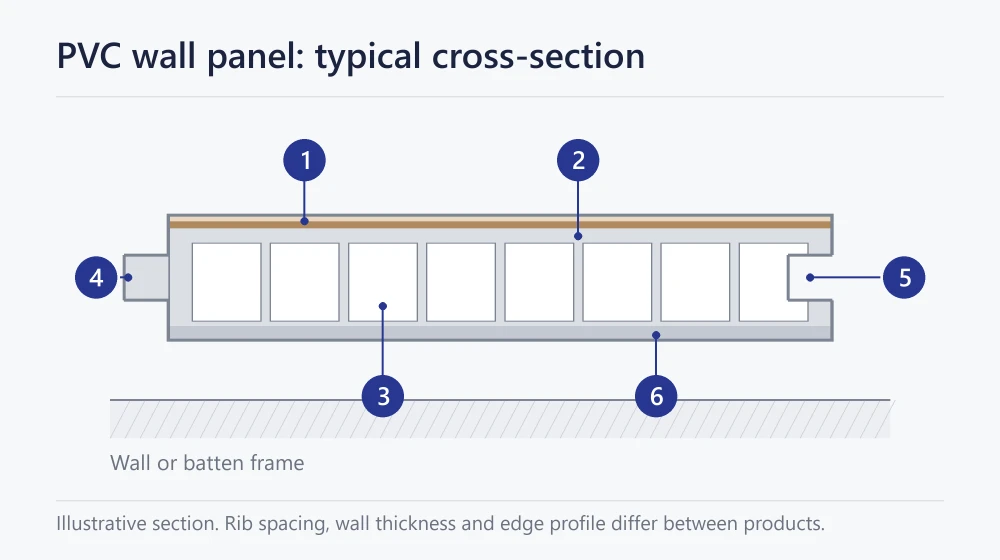
- Decorative film and protective top layer. Some boards carry a printed film, others a coating or an embossed texture. On laminated boards the film holds the woodgrain, marble or linen pattern, while a clear layer above it takes the wear.
- Extruded PVC body. The section that gives the board its thickness and its stiffness.
- Internal ribs and hollow chambers. Many profiles are hollow. Ribs run the length of the board, hold the two faces apart and thus keep weight down.
- Tongue edge. The projecting edge that enters the next board along.
- Groove edge. The receiving edge. The two then align neighbouring boards and hide the fixing.
- Back face. The rear skin that meets the wall or the batten frame.
Not every panel follows that pattern. Solid boards exist, and so do panels with a foamed core or a flat back that suits full adhesive contact. Rib spacing differs too, and it matters. Widely spaced ribs leave a longer unsupported span between them, so the face dents more easily. Ask for a section drawing rather than assuming.
Common types of PVC wall panels
Names vary by market, but the formats fall into a few recognisable groups.
- Flat decorative panels. Wide boards with a smooth face, for schemes that call for an uninterrupted field. Our flat nano boards run 400 mm wide in 8 mm and 9 mm.
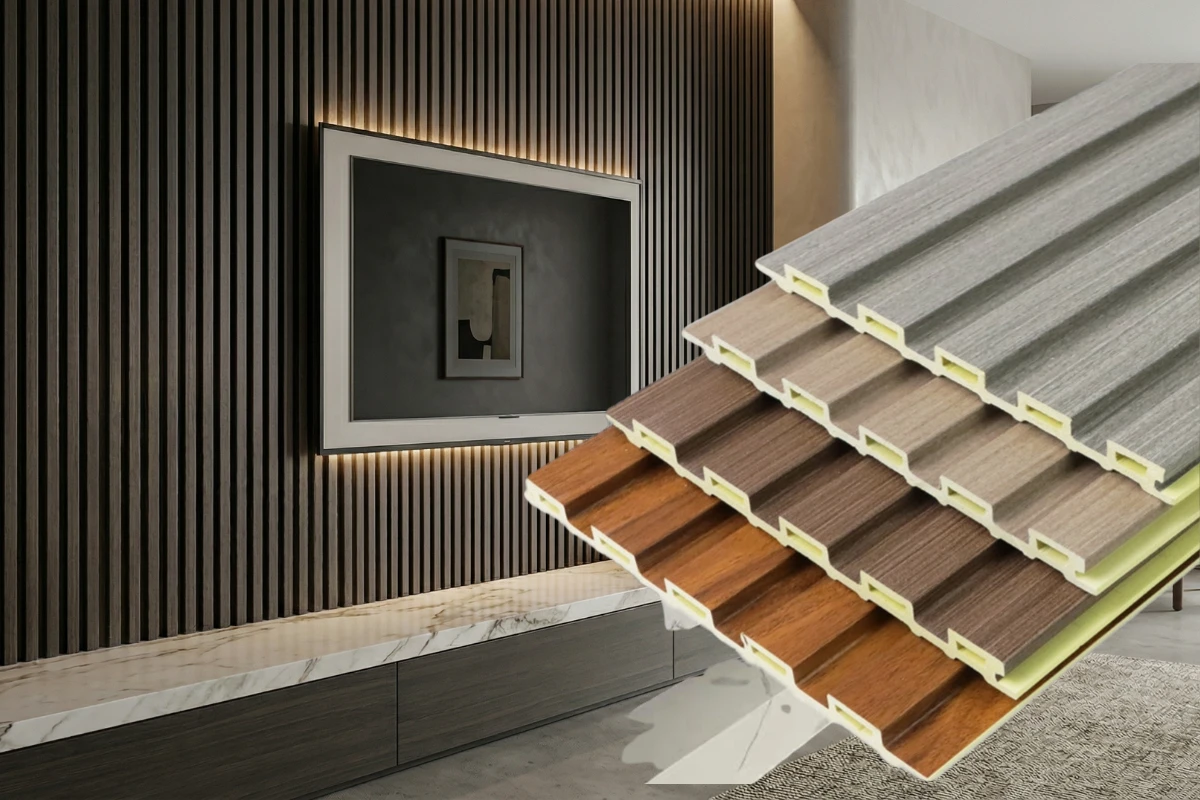
- Fluted and slat panels. Ribbed profiles that throw a shadow line down the wall. Depth changes the effect, since a 12 mm low flute reads as texture while a 27 mm deep flute reads as relief.
- Narrow cladding boards. Slim slats, generally 125 mm wide, used for linear schemes across walls, ceilings and joinery.
- Box beams and profiles. Hollow sections that work equally as decorative battens, beams or ceiling structure.
- Trims and mouldings. Corners, end caps, cornices, skirting and door casings that close the perimeter. We produce 24 matching profiles.
Finish is a separate axis from format. Woodgrain, marble, stone, linen, plain colour and classic patterns, for example, all appear across the same profiles. We run 32 surface finishes under the ZICO name, and each one crosses the flat, fluted and trim ranges. That matters on site, because a cornice in the same film as the wall beneath it looks deliberate, whereas a near match never quite does.
Key characteristics of PVC wall panels
Overall, panels compete on a small set of practical qualities. None of them is absolute, and each one depends on the specification you actually buy.
- Repeatable appearance. A printed film repeats exactly, batch after batch, so it suits large areas and phased delivery.
- Low weight. Our 9 mm flat board weighs 5.5 kg per square metre, so a plasterboard ceiling carries far less than it would under tile.
- Dry installation. Fitters cut and fix boards without wet trades, so a wall can finish in one visit rather than several.
- Simple cleaning. A sealed film face wipes down, although abrasive pads and strong solvents will damage it.
- Design flexibility. One board thickness can carry dozens of finishes, which keeps a scheme open late in design.
Consistency, meanwhile, underpins all of it. A board that varies in width by a millimetre between packs will show that variation at every joint along a long wall.
Where are PVC wall panels used?
Interior surfaces, mainly, and generally where a designer wants texture without wet trades. We work through interior cladding schemes space by space separately. Our warranty limits the product to interior use and excludes direct sunlight, and most careful suppliers say something similar.
Residential interiors
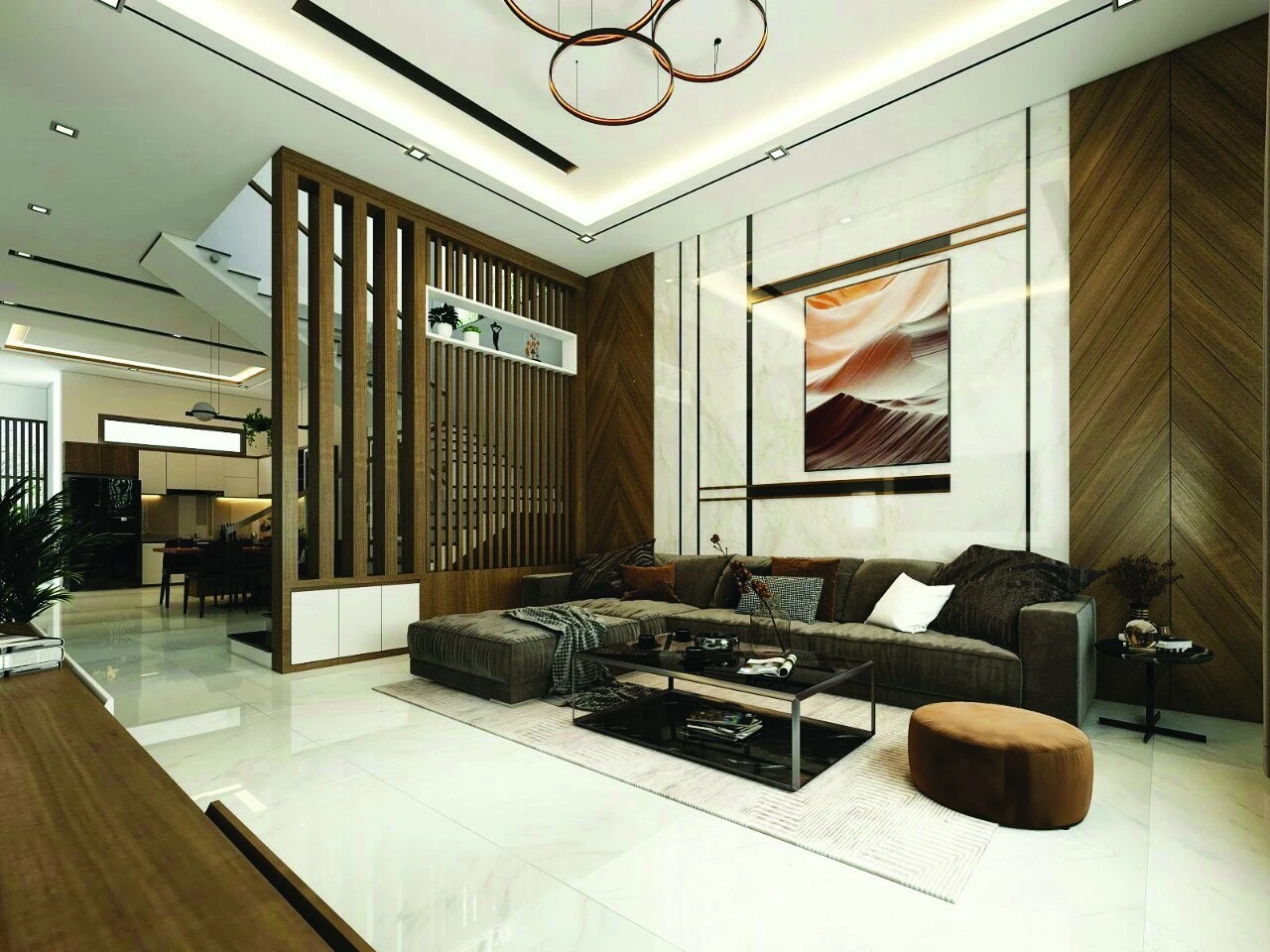
Living rooms take the largest share, mostly as a media wall or a full feature elevation. Bedrooms come next, particularly behind the bed. Corridors and stairwells suit boards well, because a rigid panel resists knocks better than paint does. Completed projects on our own site cover villa interiors, apartments, hotel corridors and office fit-outs.
Commercial interiors
Offices, similarly, use panels for reception walls and meeting-room backdrops. Retail and hospitality use them for speed, since a hotel corridor can be finished floor by floor without the drying time that plaster or paint would need. Fit-out contractors also value predictable quantities, because a board covers a known area and a pack holds a known number of boards.
Advantages of PVC wall panels
The practical case rests on four things, and each one holds only under the right conditions.
To begin with, speed. A dry, panelised finish removes drying time from the programme, so a fit-out sequence tightens. Secondly, repeatability. Because we print and laminate the surface in the factory, the tenth wall matches the first far more closely than a hand-applied finish would. Thirdly, coverage. Long boards reduce joints, and a matching trim range closes the edges without bringing in a second supplier. Finally, supply. Panel production scales, so a distributor can reorder the same finish code months later and expect the same board.
Even so, none of that makes panels the right answer everywhere. The next section covers where they are not.
Limitations and design considerations
A manufacturer who sells you a board for the wrong wall creates a problem for both of us. These are the constraints we raise with specifiers before an order goes ahead.
- Substrate condition. Panels bridge small irregularities, not structural movement or persistent damp. So fix the wall first.
- Sunlight and heat. Direct sun can affect colour and dimension in any thermoplastic. Our warranty excludes it, and so should your detailing.
- Impact exposure. A hollow-rib board dents under a hard, concentrated blow. In a loading corridor, specify a thicker section or protect the lower metre.
- Movement at joints. Thermoplastics expand and contract with temperature. Long uninterrupted runs need whatever expansion allowance the supplier specifies.
- Fire compliance. This one deserves its own paragraph.
On fire, be precise about what a document actually says. Our panels went to the Vietnam Institute for Building Materials for testing to ISO 9239-1:2010, the radiant heat source method, and the report supports a group LT1 non-flame-spreading classification under QCVN 06:2022/BXD. That is a measured result under a named national regulation. Still, it is not a fire rating to EN 13501-1 or ASTM E84, and we never present it as one. If your project needs a European or North American class, ask any supplier which test they hold, then read the scope rather than the headline. Our published certificates and test reports set out the full numbers.
PVC wall panels versus traditional wall finishes
Note that the comparison below is a framework, not a scoreboard. Each finish wins on different criteria, and the right choice follows from the room, the programme and the budget.
| Factor | PVC wall panels | Paint / wallpaper | Timber, tile or stone |
|---|---|---|---|
| Substrate preparation | Tolerant of minor unevenness | Needs a smooth, sound surface | Varies; tile needs a true, rigid base |
| Installation | Dry: cut and fix | Wet, with drying time between coats | Slower, often wet and skilled |
| Weight on substrate | Low, about 5.5 kg/m² at 9 mm | Negligible | High for tile and stone |
| Repeatability | Exact, from a printed film code | Good for paint; wallpaper batches vary | Natural variation is inherent |
| Texture and relief | Built into the profile | Flat, or shallow embossing | Genuine material depth |
| Repair | Replace a board | Repaint or repaper the area | Difficult; matching is hard |
| Main limitation | Interior only; sunlight and impact | Shows every substrate flaw | Cost, weight and programme |
Panels earn their place where speed, repeatability and texture matter together. Where a wall needs a breathable mineral finish, or where a design depends on real material depth, other finishes remain the better answer.
How to evaluate PVC wall panel quality
Appearance actually tells you least. These are the checks that run in our own process, and the ones a buyer can repeat on a sample.
- Dimensional consistency. Measure width and thickness at several points along a board, then repeat on a board from a different pack. Variation then shows up at joints.
- Straightness. Sight down the length. A bowed board fights the installer and leaves a visible line.
- Face uniformity. Look across the surface at a shallow angle under raking light. Waviness, sink marks over ribs and film wrinkles all appear that way.
- Film consistency. Compare boards from two packs. A mid-order film change is the usual cause of a delivered wall that does not match the sample.
- Joint fit. Push two boards together by hand. The joint should close without force and without a step across the face.
- Rib quality. Check the cut end. Ribs should be even in thickness and square to both faces.
- Packaging. Corner protection and consistent pack counts say a lot about how a supplier handles goods.
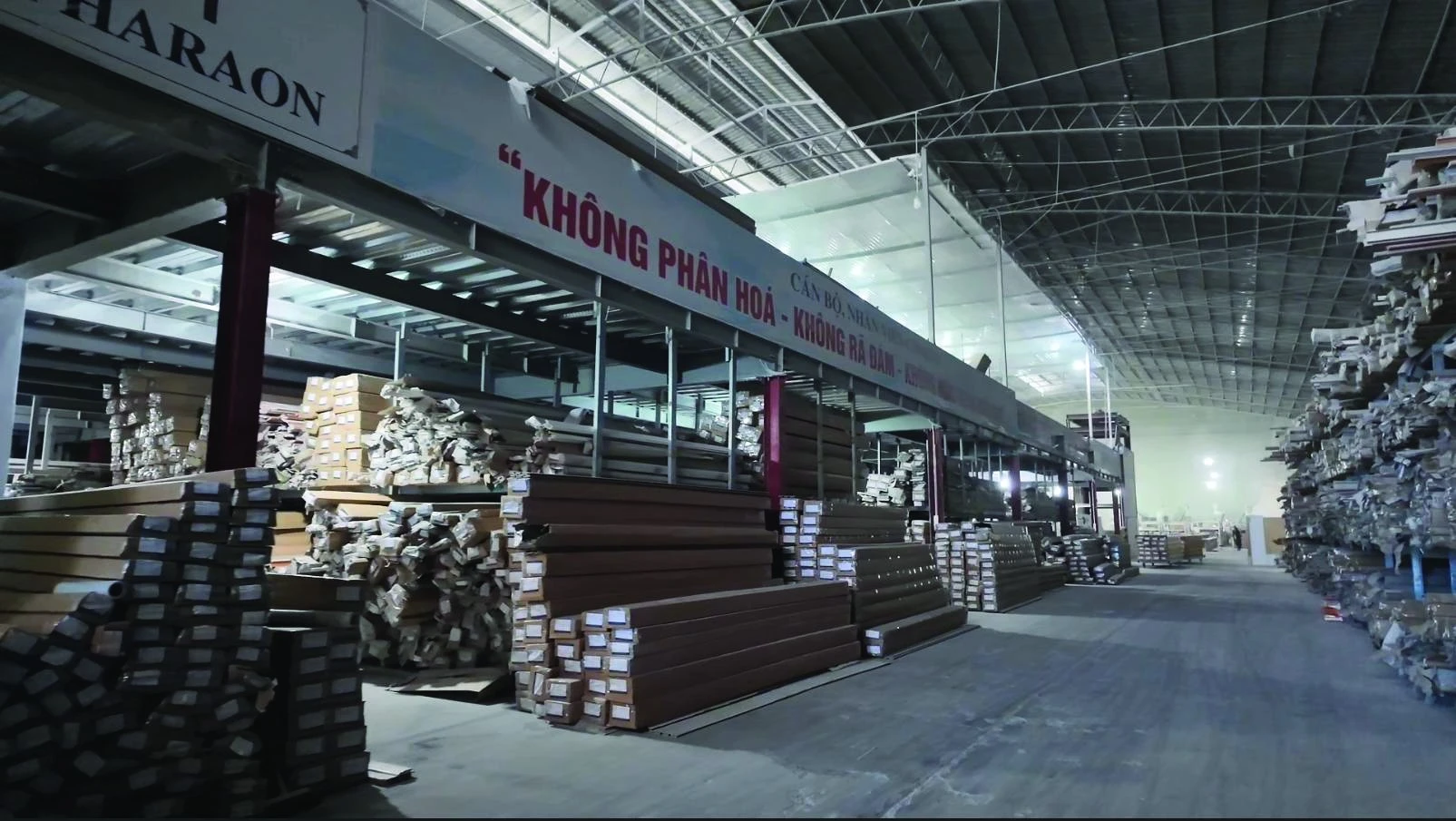
Behind those checks sits the production control that makes them pass. We run a four-stage process from incoming material through to release, and we control film batches deliberately, because a film change mid-order is exactly what turns a repeat order into a complaint. You can see how the plant is arranged on our factory page. For the decision that comes before inspection, see choosing between specifications.
What professional buyers should ask a manufacturer
A short list separates a manufacturer from a trader quickly.
- Which panel specifications do you produce, and in which widths and thicknesses?
- How many finishes are available, and do they run across every profile?
- How do you control batch consistency between orders?
- Which quality-control stages sit between raw material and dispatch?
- What certificates and test reports can you provide, and what exactly is their scope?
- How are goods packed, and what protection do the packs carry?
- What production capacity do you have installed today?
- What technical support do you give during specification and installation?
- How do you confirm lead times, and how do you handle a phased project order?
- Can you supply under our own brand, with neutral packaging?
Our answer to the last one is yes, since own-brand and neutral-packaging supply is part of normal business here. On capacity, the plant at Phu Xuyen in Hanoi runs 25 nano extrusion lines and 15 offline lamination lines across a 16,000 m² site. Ask any supplier for the equivalent numbers, and treat a refusal as an answer in itself.
Frequently asked questions
What are PVC wall panels?
They are extruded polyvinyl chloride boards with a decorative face, fixed to an interior wall or to a light frame as a panelised finish. The surface arrives finished, so nobody coats it on site.
Are PVC wall panels suitable for every interior wall?
No. They suit dry interior walls in sound condition. Persistent damp, structural movement and direct sunlight all rule them out, and heavy-impact areas need a thicker specification.
How are PVC wall panels installed?
Installers fix them to the wall directly or onto battens, using adhesive, clips or screws depending on the board and the substrate. Trims then close the edges. Method varies by product, so follow the supplier’s own instructions rather than a generic sequence. Our installation guide covers the sequence in full.
How do you clean them?
Generally, a damp cloth and a mild detergent handle normal cleaning. Avoid abrasive pads, scouring powder and solvent-based cleaners, since all three can mark the film.
How do PVC wall panels differ from paint or wallpaper?
Paint and wallpaper follow the wall. A panel carries its own thickness, edge profile and texture, so it spans minor unevenness and adds relief that a coating cannot.
How can a buyer judge quality before ordering?
Measure a sample board, sight it for straightness, compare boards from two packs, then read the supplier’s certificates for scope rather than for headlines.
Final thoughts
The useful shift, once you have read this far, is to stop treating a PVC wall panel as a surface and start treating it as a system. The board, its rib structure, its film, its edge profile and its matching trims either come off the same production run or they do not. Consistency between those parts comes out of the factory, not off the showroom shelf.
Three questions, then, carry most of the decision. Does the specification match the room, including light, moisture and impact? Does the documentation cover the exact product being quoted? And can the supplier repeat the batch when a second order lands?
If a scheme is on your desk now, browse the flat panel range or talk to our team about a project. We will tell you where our boards fit, and where they do not.